REVIEW · OSAKA
Meet Locals and Japanese Speaking Experience at British Pub Osaka
Book on Viator →Operated by Welcome Tokyo · Bookable on Viator
A pub conversation can feel more useful than apps. This Osaka language exchange takes place at HUB Umeda Chayamachi, where you chat with a mix of Japanese locals and people from overseas while the staff keep the evening moving with rotating seats.
Two things I especially like: the topic cards do the heavy lifting when your Japanese is limited, and the seat rotations help you meet 4 to 5 different people each time you switch, so the group doesn’t turn into one long, awkward conversation.
One thing to plan for: you’ll have more fun if you arrive on time and know how to get to the pub. A past participant noted that directions can be a little off, so give yourself extra time to find it.
In This Review
- Key Takeaways Before You Go
- Why A Pub Language Exchange Feels Different In Osaka
- The vibe you’re walking into
- Arriving At HUB Umeda Chayamachi Without Stress
- What happens right when you get there
- Bring the right mindset
- How The Conversation Rotation Works In Real Life
- The topics cards do more than you think
- There’s also a set English moment
- Using Japanese While You Relax With Locals
- What you can learn from real people
- Make it easy on yourself
- Price, Value, and What You’ll Actually Spend
- Why $30 can be a good deal here
- Budget reality check
- Who Should Book This Osaka Language Exchange (And Who Might Not)
- You’ll likely love it if:
- You might want to think twice if:
- Getting the Most Out of Your Two Hours
- Do this before you arrive
- Do this when you start chatting
- Do this at the end
- Should You Book This British Pub Osaka Language Exchange?
- FAQ
- Do I need to speak Japanese to join?
- What’s included in the $30 fee?
- Where is the meeting point?
- What time does the event start and how long does it last?
- How are groups organized during the event?
- Can I cancel for a full refund?
Key Takeaways Before You Go
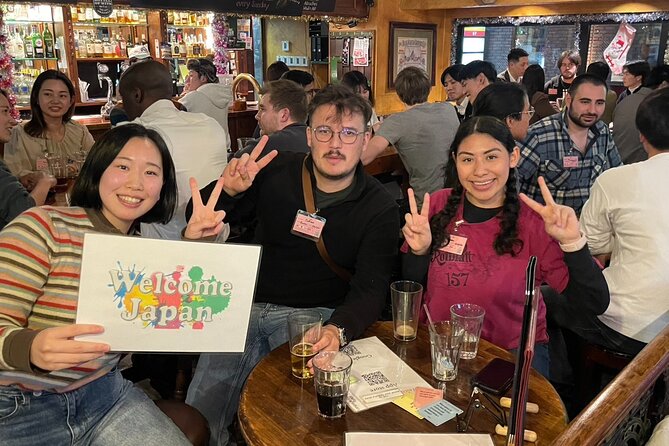
- Topic cards keep the chat easy even if your Japanese is still “survival mode”
- Seat rotation gets you multiple new faces during the same 2 hours
- Mixed groups (Japanese + foreign residents) help you get perspectives from all over Japan
- A set English window exists so you can still connect even when words get stuck
- No pressure to master Japanese; the point is trying, not performing
- HUB Umeda Chayamachi is the hub of the whole meetup—once you’re there, everything runs
Why A Pub Language Exchange Feels Different In Osaka
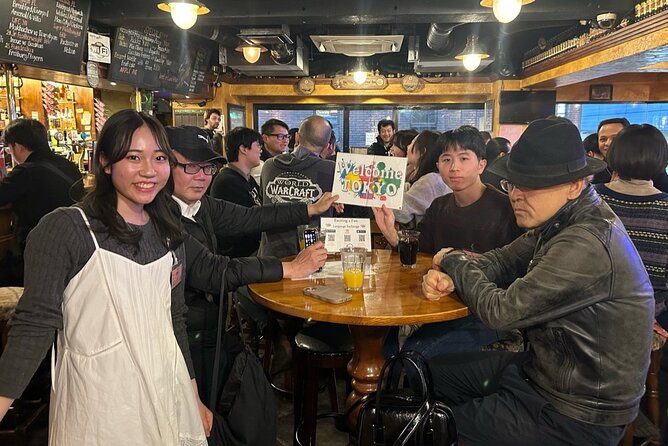
Language exchange events can go one of two ways: polite but stiff, or random but loud. This one aims for the sweet spot. You walk in for drinks and small talk, then the staff structure the night so you’re not stuck waiting for a conversation to happen.
The biggest value here is how practical it feels. You’re not studying in a vacuum. You’re meeting people who live in Japan and people who moved here, and you can trade what you actually need—where to go, what to skip, and how to make your trip run smoother. Even if you only understand part of what’s said, the back-and-forth is still useful because it trains you to respond in real time.
Also, the setting matters. British-style pubs in Japan have a low-stress rhythm: you can order a drink, relax, and speak without feeling like you’re in a classroom. That makes it easier to try a phrase you’ve learned earlier in your trip, then test it immediately.
You can also read our reviews of more tours and experiences in Osaka.


The vibe you’re walking into
Expect friendly Japanese locals and a format that nudges you to talk more than once. The event is designed so you can change seats multiple times and keep meeting new people rather than staying in one corner all night.
And yes, you can make real friendships out of it. The event description notes that some participants form small groups and sometimes go out for drinks afterward. I’d treat that as a bonus, not the main promise—but it’s a nice sign that people actually connect here.
Arriving At HUB Umeda Chayamachi Without Stress
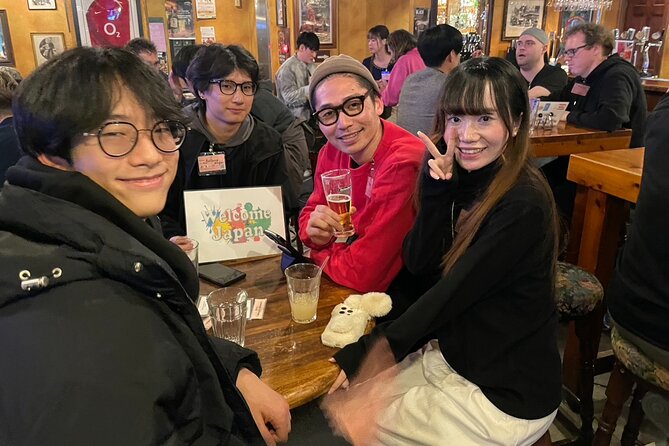
The meetup point is HUB Umeda Chayamachi, with the start time at 7:30 pm. The venue is described as being near public transportation, which helps in Osaka, where you can be a few stops away and still feel like you’re “in the right area” without being at the exact door.
Here’s the practical part I’d follow: plan to arrive early enough to get oriented, order, and check in without rushing. One participant specifically warned that finding the spot can be tricky if Google Maps isn’t lining up perfectly with where you come out of the train station. That’s not a reason to avoid the event—it’s a reason to pad your arrival time.
What happens right when you get there
Check-in happens at the reception. After that, you buy a drink from the store, and then the event begins. Seats are prepared per person, and you’re given topics cards to support the conversation.
No one expects you to be fluent. The language-exchange design is built around momentum: talk, rotate, talk again.
Bring the right mindset
You’ll get more out of it if you treat this as a structured social night. You don’t need perfect grammar. You need curiosity and the willingness to try.
If you’ve studied even a handful of phrases, this is a good place to use them. The event description specifically frames it that way: you can practice useful Japanese phrases or output Japanese you’ve already learned.


How The Conversation Rotation Works In Real Life
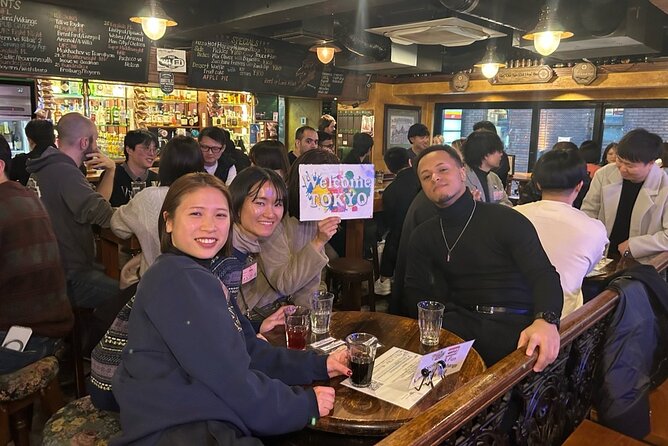
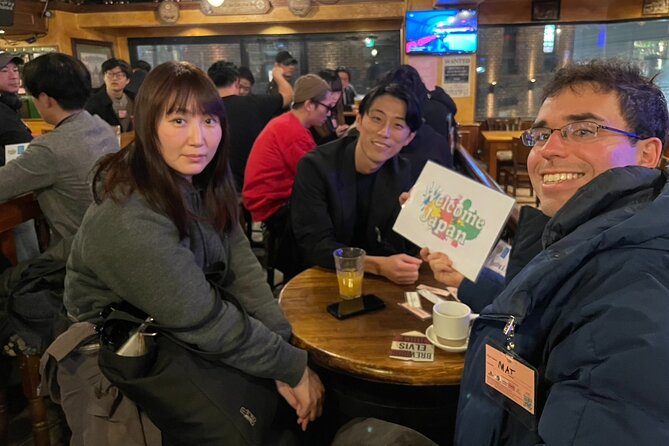
This is a 2-hour event, and the structure is what makes it work. The staff split attendees into small groups of about 3–4 people, mixing Japanese and foreigners. Then they rotate seats so each person gets multiple chances to speak with different people.
The description also highlights a simple outcome: each time seats change, you typically meet 4 to 5 different people. That’s huge if you’ve ever been to social events where you talk to the same two people for the entire night and go home unsure if you actually made any connections.
The topics cards do more than you think
If your Japanese is shaky, you might worry you’ll freeze. The topics cards reduce that risk. They give you something to react to and something to ask about—food, travel habits, where people are from, favorite local spots, or practical advice.
Even if you can only string together short sentences, you can still participate. Language exchange works when the conversation has something to orbit, and the cards create that orbit.
There’s also a set English moment
The event includes a schedule of 15 minutes of English conversation. That matters because it lowers the barrier for people who don’t want to struggle for an hour and a half straight. It also creates a clear rhythm to the night: you might use English for a short stretch, then switch back to Japanese (or whatever mix the group is using) during the rest of the time.
This isn’t about testing who’s better at languages. It’s about keeping the energy up so you actually talk.
Using Japanese While You Relax With Locals
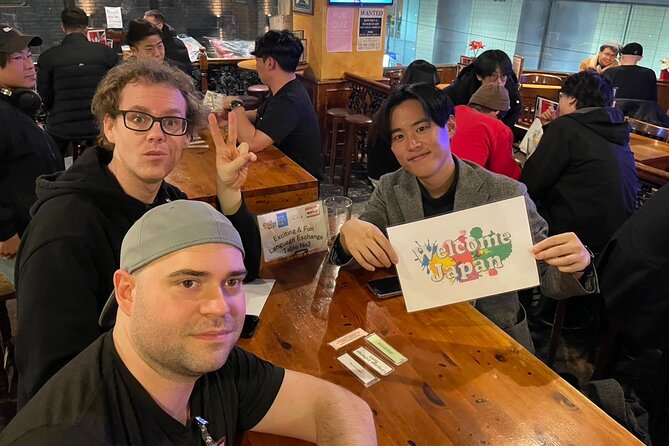
One of the best things about this kind of setup is that it removes the pressure. The event description directly says there’s no need to think about mastering Japanese through the event. That’s a big deal.
Because when you’re not trying to “perform,” you start communicating the way you do on the street: short exchanges, clarifying questions, and helpful corrections from the other person.
What you can learn from real people
You’re not just getting a few tourist tips. The event is positioned as a way to collect local information from across Japan so you can make your trip more enjoyable and smooth. That can translate into practical recommendations like:
- what people suggest based on where you’re going next
- what local residents say is worth the time
- which areas feel easier to navigate or more convenient
Even when you don’t catch every detail, the fact that multiple people share their own perspectives gives you better decision-making. You’ll leave with a short list of ideas you can actually use.
Make it easy on yourself
Here’s the approach I’d use if I were walking into the event:
- Use your topics card to ask one question and follow up once
- Try one small Japanese phrase you’ve learned earlier that day or week
- If you get stuck, switch to simpler sentences or a shared language mix rather than stopping completely
Language exchange works best when you keep the conversation alive, not when you chase perfect wording.
Price, Value, and What You’ll Actually Spend
The price is $30.00 per person for the event, and it includes all fees and taxes. That’s the baseline value.
What’s not included is also clearly stated: alcoholic beverages and food are not included. You buy what you drink and eat when you arrive. So your total cost will depend on what you order.
Why $30 can be a good deal here
What you’re paying for isn’t just “being in a room with people.” You’re getting:
- staff-led grouping and rotation
- topics cards to guide conversation
- a designed structure that pushes you to talk multiple times
- a set chunk of 15 minutes of English conversation
If you’ve done language exchanges that feel unstructured, you’ll notice the difference fast. This format reduces dead time and increases the chance you’ll meet more people—especially local Japanese participants.
Budget reality check
Since drinks aren’t included, I’d treat the $30 as the event cost and plan an additional amount for your pint (or whatever you choose to order). If you’re trying to keep costs low, you can still enjoy the experience by choosing a lighter drink and focusing on the conversations.
Who Should Book This Osaka Language Exchange (And Who Might Not)
This event fits best if you want real interaction without studying first.
You’ll likely love it if:
- you’re in Osaka and want a way to meet locals and foreign residents
- you’re comfortable speaking in short bursts, not long perfect sentences
- you want structure—topics cards and seat rotations do that work for you
- you’re 20+ (the event is over 20 years old)
- you enjoy casual social settings with low pressure
You might want to think twice if:
- you’re only looking for a serious “learn Japanese grammar” class
- you hate the idea of moving seats and meeting new people frequently
- you expect drinks to be included in the price (they aren’t)
This isn’t a private tutoring session. It’s a guided social language exchange designed to get you talking.
Getting the Most Out of Your Two Hours
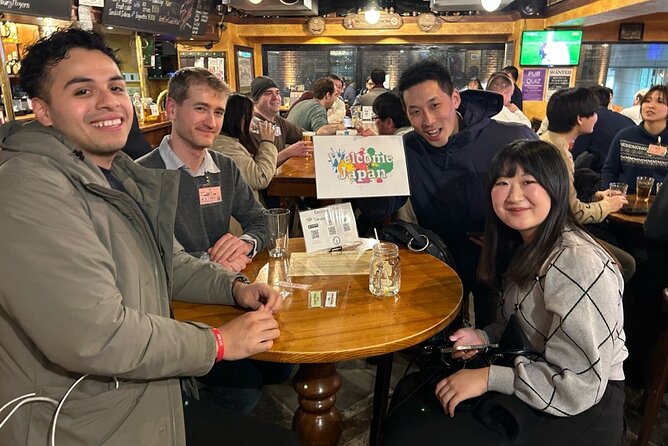
Two hours sounds short, but with seat rotations it can feel like several conversations packed into one night. Still, your results depend on how you show up.
Do this before you arrive
- Pick one or two Japanese phrases you want to try
- Have a simple question ready for when you meet someone new
- Bring your best “curious listener” mode
Do this when you start chatting
- Use the topic card as your starter, not a script
- Aim to learn one practical thing from each person
- Don’t wait for the other person to rescue the conversation—ask a follow-up
Do this at the end
If the event gives you chances to exchange contact information, use them. Some people form groups after and sometimes go out for drinks, so those connections can extend beyond the meetup itself.
Should You Book This British Pub Osaka Language Exchange?
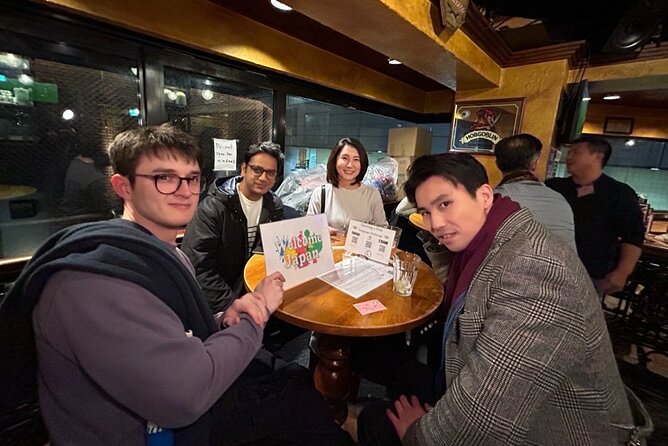
If you want a fun, structured way to meet Japanese locals and people living in Japan—while practicing Japanese with support—this is an excellent pick for Osaka. The topic cards, small mixed groups, and seat rotations are exactly what you want if you’re worried the night will pass with no real conversations.
Book it if your main goal is connection and practical local insight, not a classroom lesson. Show up a little early to avoid the venue-finding headache, grab your drink, and let the rotation do the work.
Overall: with a top rating (4.9) and strong recommendation level (100% based on the available feedback), the odds are good that you’ll leave feeling like you met people, not just attended an activity.
FAQ
Do I need to speak Japanese to join?
No. The event is designed for conversations where you don’t need to master Japanese. It encourages you to use useful phrases and try them with Japanese participants.
What’s included in the $30 fee?
All fees and taxes are included. Admission includes the event format and the conversation materials (like topic cards). Drinks and food are not included.
Where is the meeting point?
The meeting point is HUB Umeda Chayamachi.
What time does the event start and how long does it last?
It starts at 7:30 pm and lasts about 2 hours.
How are groups organized during the event?
Staff split attendees into small groups of about 3–4 people, mixing Japanese and foreign participants, and they change seats so you can talk more than once with different people.
Can I cancel for a full refund?
Yes. You can cancel up to 24 hours in advance for a full refund. If you cancel less than 24 hours before the start time, the amount paid is not refunded.