REVIEW · TOKYO
Low-cost local pub & bar crawling
Book on Viator →Operated by JUNKO KATO · Bookable on Viator
Tokyo’s quiet neighborhoods have better drinks. This Akabane pub and bar crawl takes you to places locals actually go, with Junko Kato translating and helping you order even when the menus are only in Japanese. And it’s built for a small group of up to four, so you’re not lost in a crowd while you’re trying to figure out what to drink and eat.
I also like how the stops are different enough to keep things interesting: oden at a classic alley counter, river-fish izakaya vibes, and skewers at a no-nonsense, good-value place. One drawback to plan for: alcohol isn’t included, and some stops expect you to buy drinks, so you’ll want extra budget beyond the $32.58.
In This Review
- Key points before you go
- Akabane After Dark: Why This Pub Crawl Feels Local
- Price and Time: What $32.58 Buys (and What It Doesn’t)
- Meet Junko Kato at Akabane Station (and Avoid the Menu Stress)
- The 20-Minute Jump from Shinjuku to a Very Different Tokyo
- Stop 1: Maruken Suisan and Oden in a Small Alley
- Stop 2: Marumasu-ya Izakaya With River Fish and Local Hangouts
- Stop 3: Maruyoshi Skewers, Reasonable Prices, and Seat Courtesy
- How to Order in Japanese Without Freezing at the Counter
- What This Crawl Teaches You About Local Etiquette
- What Kind of Traveler Should Book This?
- Should You Book This Akabane Pub Crawl?
- FAQ
- How long is the Akabane low-cost pub and bar crawl?
- What is the group size limit?
- Is there a guide who translates during the tour?
- What food and drink can I expect?
- Are alcoholic beverages included in the tour price?
- Where does the tour start and end?
- What happens if the weather is poor?
Key points before you go
A small-group crawl (max four) that keeps translation practical, not chaotic
Junko Kato helps you order in Japanese when menus aren’t tourist-friendly
Akabane, on Tokyo’s outskirts, where you’ll eat and drink at local-style counters
Three focused stops: oden, river-fish izakaya, then skewers with strong value
Bring an appetite and be ready for quick pacing—seating turnover matters at one stop
You meet at Akabane Station and head back to the same spot
Akabane After Dark: Why This Pub Crawl Feels Local
If you want Tokyo that doesn’t look like every other itinerary, Akabane is a smart choice. It’s not the center of the tourist map, and that’s exactly the point. This crawl swaps neon “for visitors” bars for the kind of small places where you see regulars, overhear real conversations, and eat what people are ordering tonight—not what’s easiest to serve to strangers.
The other thing that makes this work is how it handles language. You don’t need to hunt down an English menu or play guessing games with characters you can’t read. Junko Kato translates for you, and you also get practical guidance on how to order in Japanese. That means you’ll spend your effort tasting rather than decoding.
Finally, the structure is ideal for a first-night experience in the area. It runs about three hours, with multiple stops rather than one long meal. That gives you variety—without turning your evening into a marathon.
You can also read our reviews of more tours and experiences in Tokyo.

Price and Time: What $32.58 Buys (and What It Doesn’t)
At $32.58 per person for about three hours, this is priced for the experience support: guide time, translation between you and the staff, and advice on ordering. It’s not sold as an “all-you-can-eat” deal, and the wording is clear that alcohol isn’t included. Alcoholic beverages, including any minimum drink charge connected to the tour guide, are not included—and dinner isn’t included either.
So how do you judge value? You’re paying for two things that are hard to recreate on your own:
- You get help ordering when the menus are in Japanese.
- You get a guided path to specific, local-feeling places in Akabane.
If you already know you like izakaya-style dining and you’re comfortable spending on drinks once you know what to order, the base price is a strong value. If you prefer strict control and want zero extra spending, it may feel incomplete because your total evening cost will likely be higher once you buy drinks at the stops.
As for timing, you’ll visit three stops with set time blocks (around 50 minutes, 1 hour 20 minutes, and 50 minutes). That keeps things moving. You’re not stuck at one spot waiting for the group to finish.
Meet Junko Kato at Akabane Station (and Avoid the Menu Stress)
Your meeting point is Akabane Station 1 Chome-1, and the tour ends back at the meeting point. That matters more than it sounds. When a pub crawl is self-guided, you spend time backtracking or worrying you missed a turn. Here, the route is handled for you.
Also, the guide support is the heart of the experience. Junko Kato translates for you between the group and the pub staff, and she also gives tips on how to order in Japanese. This is exactly what you want in Japan if you don’t speak the language. In many local places, you might be handed a menu that isn’t designed for English readers. With translation on your side, you can order with confidence.
The group size is capped at four travelers, which usually means you’ll get smoother interactions than in big groups. Staff and guests aren’t trying to manage ten different requests at once, and the guide can keep everyone aligned.
One more practical detail: the tour uses a mobile ticket. If you’re the kind of traveler who hates last-minute paperwork, you’ll probably appreciate the simplicity.
The 20-Minute Jump from Shinjuku to a Very Different Tokyo
The crawl starts from the Shinjuku area, with a journey time of about 20 minutes to reach Akabane. That short transfer is useful because it lets you do an evening activity without losing your whole night to getting there.
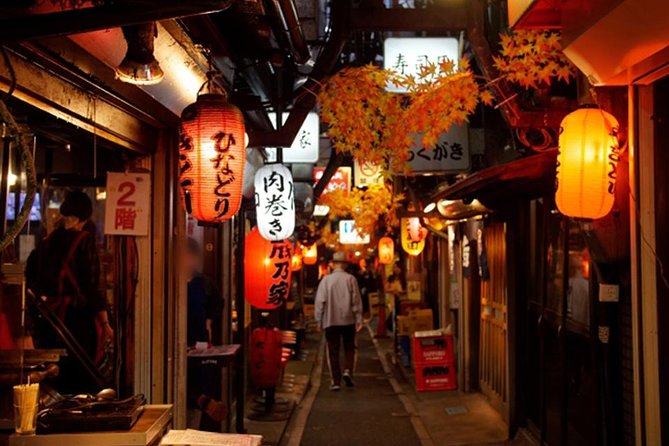
You’ll also feel the shift in vibe as soon as you arrive. Shinjuku is all motion and lights. Akabane is more about local routine—small counters, alleyways, and food that’s ordered the way people order it every week. That’s what makes the experience feel like Tokyo beyond the guidebook highlights.
Stop 1: Maruken Suisan and Oden in a Small Alley
The first stop is Maruken Suisan, an old-style oden shop. Expect an atmosphere that’s more counter-and-legs-out than fancy dining. It’s known as an old shop, and the setting includes an outside standing bar tucked into a small alley.
Why this stop works for you:
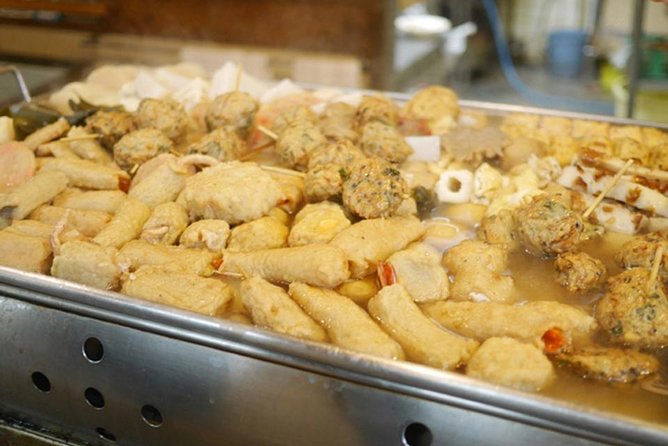
- Oden is a comfort-food anchor in Japanese pubs. It’s the kind of dish that fits an evening crawl because it’s warm, filling, and easy to share (or at least easy to enjoy at a counter).
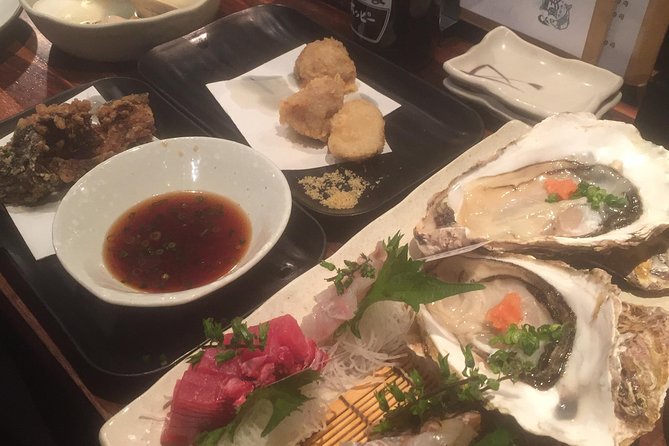
- Maruken Suisan offers a rich variety of oden options, including vegetables, fish balls, and tofu. Even if you’re not sure what to pick, the guide’s ordering advice helps you avoid getting stuck with one safe item.
Time here is about 50 minutes, which is enough to try what’s offered without making it feel rushed. Still, because it’s a standing-counter style, it’s not the place to plan a long sit-and-chat session.
Possible drawback: if you’re someone who strongly prefers seats and table service, this stop may feel more “quick stop” than “dinner experience.”

Stop 2: Marumasu-ya Izakaya With River Fish and Local Hangouts
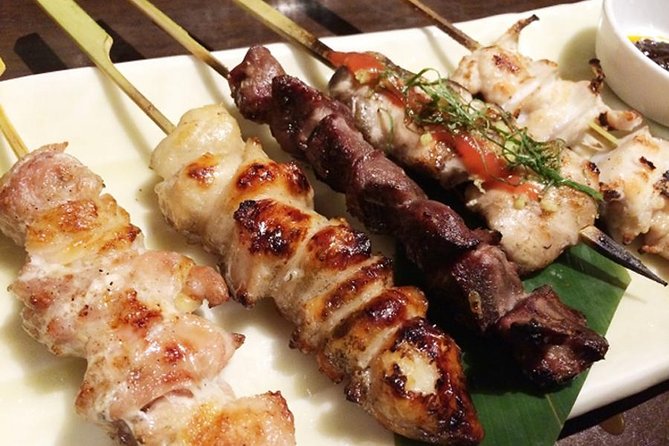
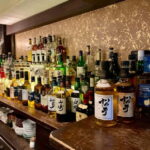
Next is Marumasu-ya, an izakaya-pub with a long history. This one is famous for river fish, and the vibe is classic: locals gathering, old-time atmosphere, and the kind of place where people come to eat, drink, and talk.
This stop lasts about 1 hour 20 minutes, so it’s your main stretch. That’s useful because you’ll want some time to settle in, slow down a bit, and actually enjoy the meal rather than just collecting bites at each location.
What you’ll likely appreciate most is that menus in these older izakaya spots can be hard to use without support. In this experience, translation bridges that gap, and you get guidance on ordering in Japanese. That means you can focus on taste instead of trying to decode items letter-by-letter.
A small practical consideration: because this is an izakaya setting, it can be lively. If you’re sensitive to noise, it’s smart to mentally prepare for an energetic room rather than a quiet restaurant.
Stop 3: Maruyoshi Skewers, Reasonable Prices, and Seat Courtesy
The final stop is Maruyoshi, a place known for skewers. Here’s what stands out: even if you eat and drink a lot, the pricing is described as very reasonable. That’s a big deal on a pub crawl, because skewers are the kind of food that can quietly add up unless you know where you’re going.
This stop is about 50 minutes, and it comes with an etiquette note worth taking seriously: please don’t drink and stay too long. The instruction is to give your seat for locals.
That tells you the reality of small Japanese venues. Space is tight. People rotate in and out. If you treat the seat like a hotel lounge chair, you’re fighting the flow of the place. The tour’s pacing helps you follow the local rhythm.
If you want to get the most value at this last stop, I’d treat it like a final-course sprint:
- Order what you actually want.
- Don’t overcommit to extra drinks if you’re concerned about time.
- Keep an eye on the space around you.
How to Order in Japanese Without Freezing at the Counter
You’re not expected to speak Japanese fluently. The point is guidance. The tour includes advice on how to order in Japanese, plus translation between you and the staff.
That combination matters because it helps you in two ways:
- You’ll understand what you’re ordering, instead of guessing.
- You’ll be able to communicate what you want clearly enough for the staff to respond quickly.
A simple mindset helps a lot: think of this as ordering like a polite regular, not like a tourist trying to win a vocabulary quiz. You can stay flexible—ask for help when something sounds unfamiliar, and trust the guide’s prompts when you’re choosing.
Also, pacing matters. Since you’re moving stop to stop, you’ll get better results if you don’t try to build a huge meal every place. Focus on signature items: oden here, river-fish focus there, skewers to finish.
What This Crawl Teaches You About Local Etiquette
Food tours often stop at tasting. This one also teaches how to behave in tight, local spaces.
The biggest hint comes from that last stop: the place asks you not to linger once you’ve had your drinks and food. It’s not rude. It’s practical. Seats are limited and the venue serves a steady stream of locals.
The second etiquette piece is about ordering and communication. When menus are in Japanese, locals don’t get upset because you’re not from there. They just need you to be clear enough to order. That’s where translation and the guide’s tips become your etiquette toolkit.
Finally, going with a small group keeps social dynamics calmer. In larger groups, people tend to call across tables and slow the process down. Here, with up to four travelers, it’s easier to keep everything moving and respectful.
What Kind of Traveler Should Book This?
This experience fits you if:
- You want authentic local atmosphere instead of tourist pubs.
- You want help ordering when menus are only in Japanese.
- You like trying several specialties in one evening: oden, river fish, and skewers.
It’s also a good fit if you’re new to Tokyo or you’re exploring areas outside the core neighborhoods. Akabane isn’t as “known” as places like Shinjuku, but that’s why this crawl feels more like finding Tokyo by yourself—with guardrails.
You might want to skip it if:
- You hate standing-counter style settings, especially at an outdoor bar.
- You strongly dislike the idea that alcohol costs extra and could include a minimum drink charge.
- You prefer long, slow, sit-down meals instead of a paced crawl.
Should You Book This Akabane Pub Crawl?
Yes, if you want an evening that feels like Tokyo lived-in, not performed. The strongest reasons to book are the small-group limit of four and the translation and ordering help from Junko Kato. Those two things solve the main problems that derail independent pub crawls in Japan: language and local flow.
But book with eyes open. Alcohol isn’t included, and one stop specifically asks you to avoid staying too long. If you like to spread out for hours, you may find the pacing a little firm. If you like sampling and moving from one specialty to the next, this is a smooth, well-timed format.
If you’re planning ahead, it also helps to reserve early. The experience is typically booked about 56 days in advance on average, so securing your spot sooner rather than later is a smart move.
FAQ
How long is the Akabane low-cost pub and bar crawl?
It runs for about 3 hours.
What is the group size limit?
The tour has a maximum of four travelers.
Is there a guide who translates during the tour?
Yes. The included service includes a guide and translation between you and the pub staff.
What food and drink can I expect?
You’ll visit places focused on Japanese pub staples, including oden at Maruken Suisan, river fish at Marumasu-ya, and skewers at Maruyoshi.
Are alcoholic beverages included in the tour price?
No. Alcoholic beverages are not included, including any minimum drink charge for the tour guide.
Where does the tour start and end?
It starts at Akabane Station 1 Chome-1, Akabane, Kita City, Tokyo 115-0045, Japan and ends back at the meeting point.
What happens if the weather is poor?
The experience requires good weather. If it’s canceled due to poor weather, you’ll be offered a different date or a full refund.